
by: Leonardo Corbucci 4 Dicembre 2024 15:32
Redevelopment and Remediation of Industrial Roofing from Asbestos
Environmental and Health Impacts: Why Removing Asbestos is Crucial and the Risks of Inaction
The term asbestos refers to a group of fibrous minerals characterized by their thin, elongated structure.
Exposure to asbestos dust and fibers has been extensively documented as carcinogenic, with devastating effects on human health.
When it comes to refurbishing industrial roofs containing asbestos, partnering with experienced professionals is crucial.
Gruppo Inveco, a leader in renewable energy and industrial sustainability, provides a comprehensive service that combines the safe removal of asbestos with innovative solutions for roof refurbishment.

From Preliminary Assessment to Project Management:
- Analysis and evaluation of roof conditions to identify the presence of asbestos.
- Remediation planning with a focus on safety and compliance with regulations.
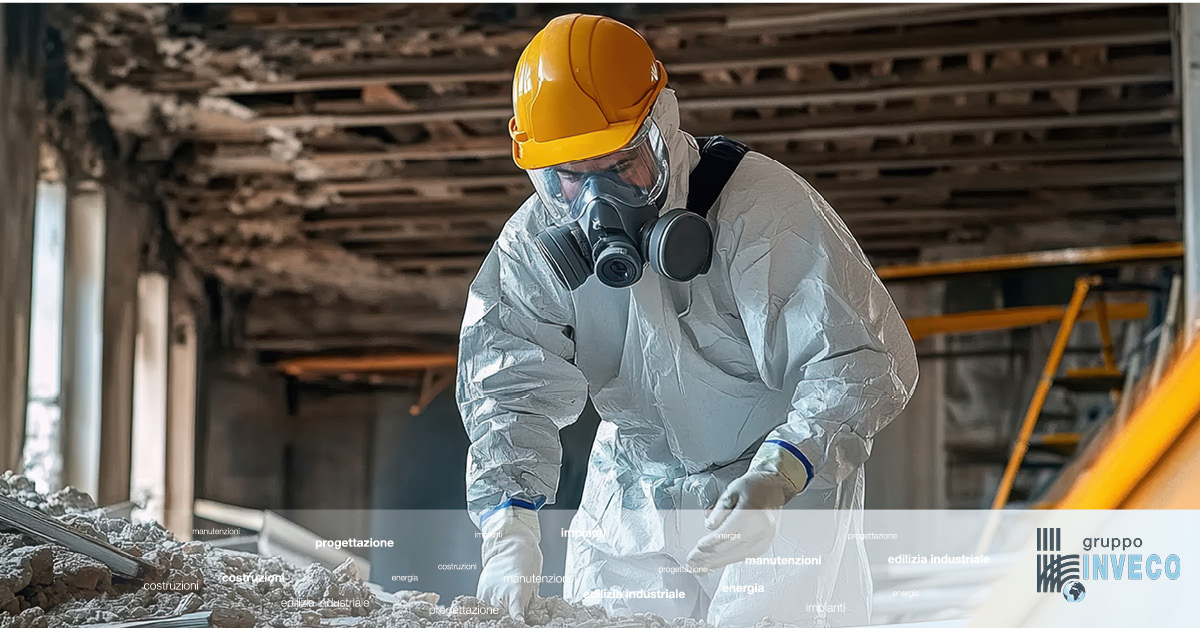
- Certified removal and disposal using advanced technologies and qualified personnel.
- Roof redevelopment with eco-friendly materials and preparation for clean energy production.
For years, we have stood out for our integrated approach, combining remediation with the installation of photovoltaic systems. This enables businesses to turn a regulatory obligation into an opportunity to optimize energy efficiency and reduce operational costs.
Risks to Human Health
The health effects on humans range from chronic inflammation of the respiratory system to cancers such as mesothelioma (a lung tumor), which reduces life expectancy to just 14 months, and other malignancies primarily affecting the stomach and intestines.
The WHO, in its publication “Asbestos” dated September 27, 2024, stated that “occupational asbestos exposure causes over 200,000 deaths worldwide each year, accounting for more than 70% of deaths from work-related cancers.”
In Italy, the ISS estimated approximately 4,400 deaths per year due to asbestos exposure during the period 2010–2016.
Asbestos and Its Prevalence in Italy
Many asbestos exposures originate from occupational settings.
Until it was banned, this mineral was widely present in workplaces and, unfortunately, can still be found in many industrial buildings today.
In Italy, asbestos was extensively used in construction due to its soundproofing and thermal insulation properties, as well as its ability to blend perfectly with materials like lime and plaster.
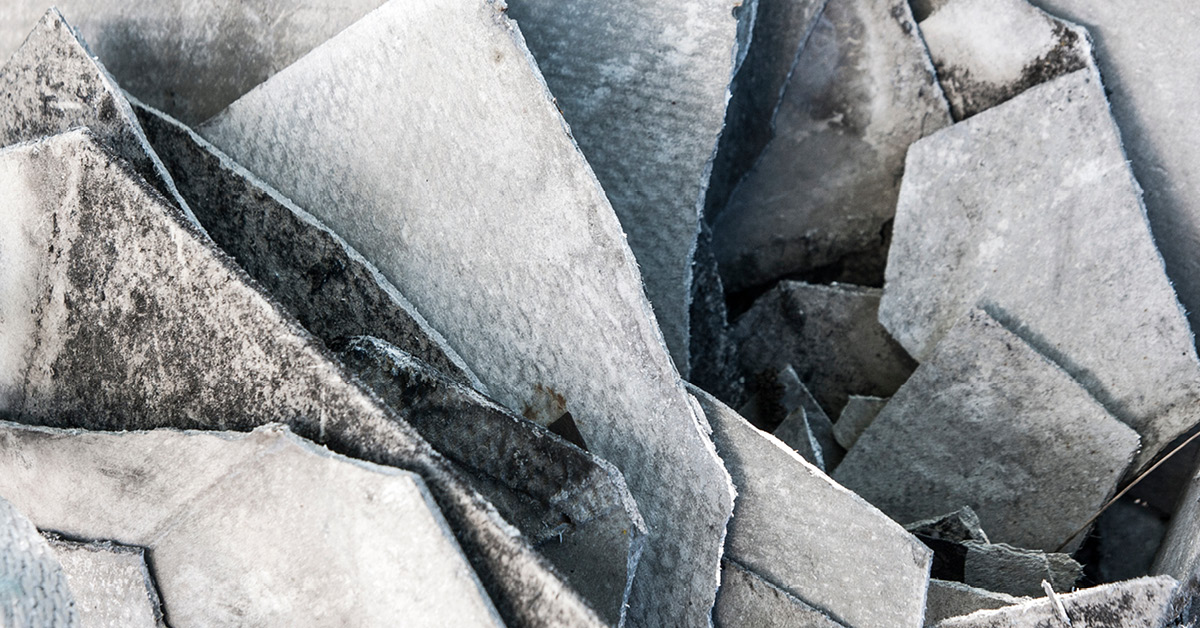
The term Eternit refers to asbestos cement products (corrugated sheets) manufactured and sold by the company of the same name, headquartered in Casale Monferrato (AL).
The Ban on Asbestos Use in Italy
On March 27, 1992, with Law 257/92, Italy banned the use of asbestos, 13 years ahead of the European Union’s prohibition.
Incentives and Subsidies: Opportunities to Access Public Funding for the Remediation and Redevelopment of Industrial Roofs
Despite the prohibition, a significant portion of real estate still contains asbestos, particularly in many industrial roofing structures.
Fortunately, public incentives are available to support companies in the removal and remediation of such materials.
Non-repayable Grants from INAIL
Each year, INAIL promotes grants to improve workplace safety, offering non-repayable contributions of up to 65% of the total cost for asbestos removal, with a maximum amount of €130,000.
- The grants are open to all businesses, including sole proprietorships, registered with the Chamber of Commerce.
- As the funding pool is limited, applications are managed through a “click day” system: priority is given to those who submit their applications first, until the funds are exhausted.
How to Participate in INAIL Calls for Proposals
Questions must be submitted through the INAIL online portal by completing a validation form.
It is essential to submit the application as soon as possible to secure access to the funds.
How to Identify an Asbestos Roof?
To determine whether a roof is made of asbestos-containing material, it is essential to rely on a specialized technician who will perform a series of inspections.
Verification Phases
- Year of Construction: If the building was constructed after 1994, it is unlikely that the roof contains asbestos.
- Manufacturer’s Brand: Identifying the manufacturer of the material can help determine the presence of asbestos.
- Visual Assessment: An expert, relying on experience and available information, can often identify the presence of asbestos.
- Laboratory Analysis: This is the definitive procedure to confirm the presence of asbestos in the material without any doubt.
Asbestos Roofs: When Is Removal Mandatory?
The removal of asbestos is mandatory only if the material is friable, damaged, or deteriorated, posing health risks.
What to Do in Case of Friable or Deteriorated Asbestos.
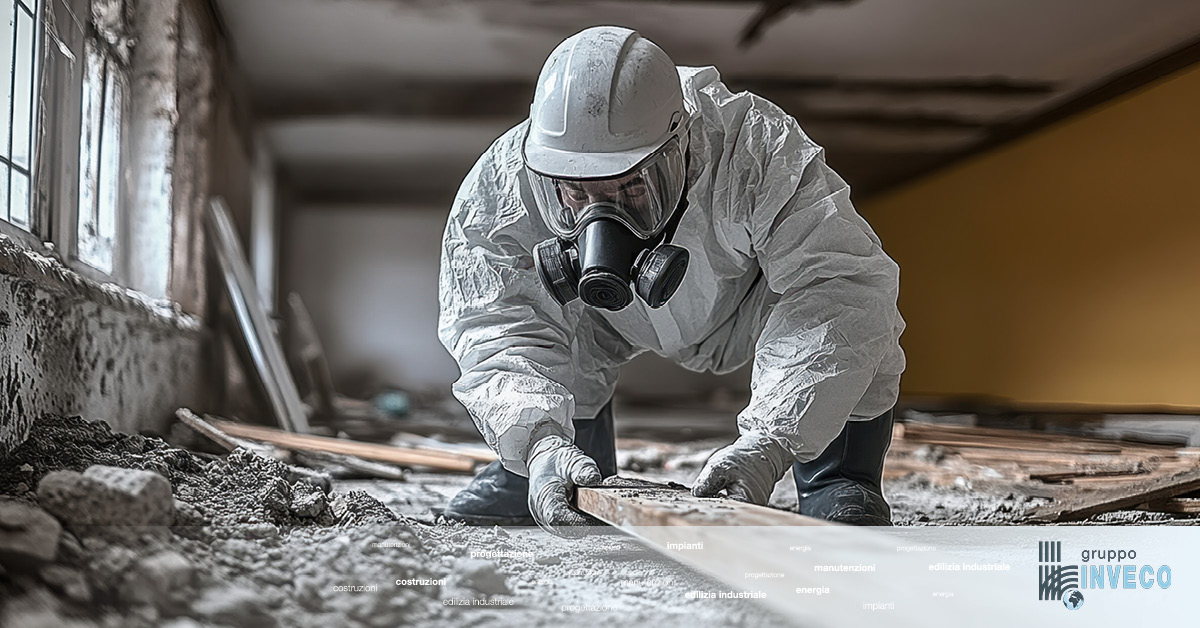
If the roof is damaged, it is necessary to submit a SCIA (Certified Start of Construction Notification) to initiate the removal works. These works must be carried out by specialized companies registered with the Environmental Managers Register.
These companies will also handle the disposal of contaminated materials.
Compatible Asbestos: When Removal Is Not Mandatory
If the material is compact and in good condition, its removal is not mandatory.
However, periodic inspections by specialized technicians are required to monitor the condition of the material.
In this case, the Public Administration will coordinate and determine the necessary actions to be taken.

Alternative to Removal: Asbestos Remediation Methods
When asbestos is neither friable nor damaged, there are two alternative methods to removal:
Encapsulation
Encapsulation involves the application of penetrating or coating products that enclose asbestos fibers, forming a protective film on the exposed surface and restoring adhesion to the substrate.
Overcovering
The over-covering involves installing a sealed barrier that separates asbestos from the occupied areas of the building.
It is essential to ensure that this barrier is maintained in good condition to guarantee safety.
Conclusion
The remediation of asbestos is not just a regulatory obligation but a significant opportunity to enhance the safety, efficiency, and sustainability of industrial buildings.
Pairing this intervention with the installation of a photovoltaic system not only modernizes and secures the building but also reduces long-term energy costs, contributing to a greener and more sustainable future.
Our expertise in the field, combined with tailored solutions and tax incentives, allows companies to address these challenges with confidence, turning them into tangible economic and ecological benefits.
Contact us today to discover how we can help make your facility safer, more efficient, and eco-friendly with integrated solutions that look toward the future of your business.
Insight provided by Engineer Matteo Pierotti.
Recent Posts
Categories
